Fishing Calendar & Tide Times
- 4.6
- Rating
- 100.00K
- Installs
- Free
- Price

 Analysis by App-foxy
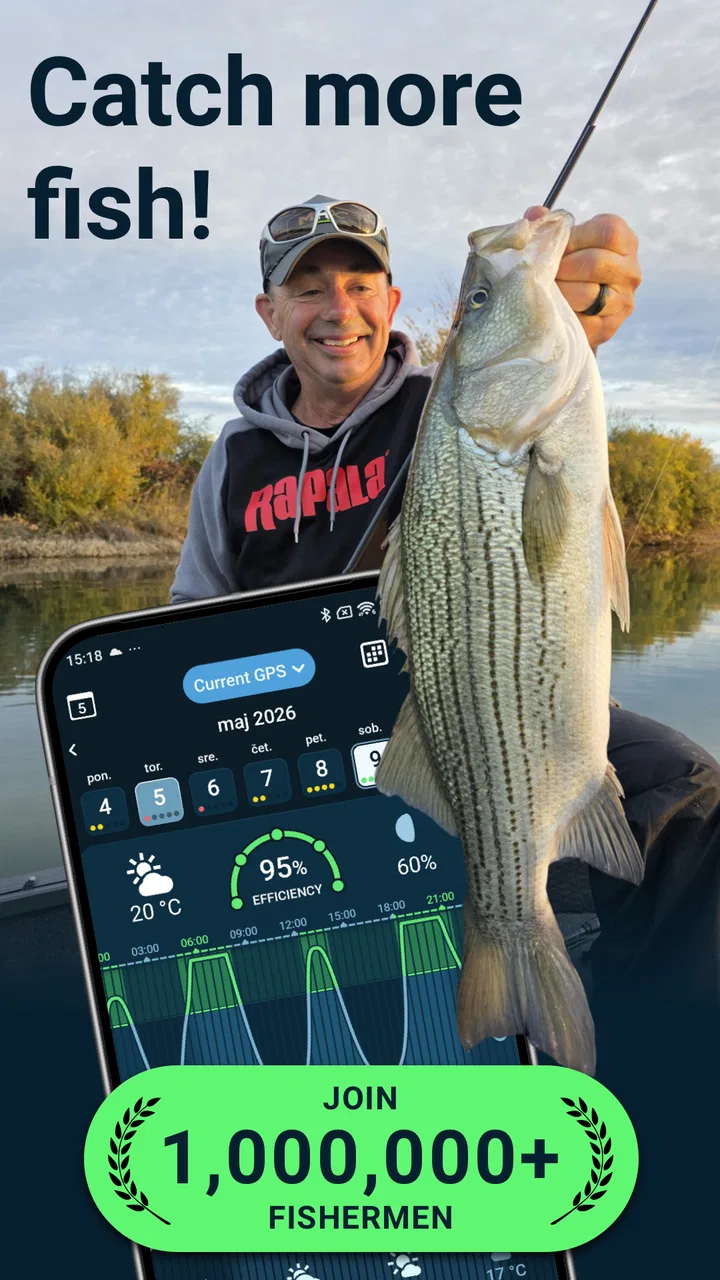
I installed Fishing Calendar & Tide Times expecting a focused planning tool rather than another general weather screen, and that is exactly where it makes its best impression. It is a free weather app from The AppDev Studio, built around fishing conditions: solunar timing, tide information, and marine weather in one place. The idea is simple, but useful. Instead of checking a general forecast, then searching separately for tide tables and trying to remember when fish activity may be more favorable, I can begin the planning process from one fishing-oriented view.
The app has a 4.7 average from around 4.1 thousand ratings, with over 100 thousand installs. Those figures suggest that it has found a clear audience, and after using it, I can see why. It is not trying to replace every specialist marine resource or become a full fishing logbook. Its value is more practical: it helps answer the question, “Is this a sensible time to go?” That makes it appealing during the first few days, especially if I usually make fishing plans by checking several unrelated apps.
What Fishing Calendar & Tide Times feels like in regular use
In regular use, I’d treat Fishing Calendar & Tide Times as a quick planning checkpoint, not a verdict on whether a trip will succeed. Its particular value is helping me compare timing with tides and marine conditions before I commit to a plan; the next section looks at how that focused approach differs from opening several general-purpose forecast tools.
You May Also Like

 Blood Strike: 2.5 Anniversary
Blood Strike’s Loadouts Turn Every Drop Into a Tactical Gamble
A close look at Blood Strike’s custom loadouts: how fast access to signature weapons reshapes its battle royale rhythm, rewards preparation, and narrows the gap between fights.

 Pandora - Music & Podcasts
Pandora’s Music Is Easy to Start, but Harder to Recover
Pandora’s strength is its low-effort path from a seed to a station. Its weak spot is how much confidence it asks you to place in connection, setup, and quiet recovery.

 8 Ball Pool
 Is Built on Rivalries, Rematches, and Routine
A close look at the rivalries, rematches, shared routines, and unanswered safety questions that turn a quick pool match into a persistent mobile community.

 Samsung Music
’s Quiet Strength Is Playing What You Already Own
Its reach comes less from spectacle than from dependable access to a personal library. That simplicity is both the app’s strongest retention engine and its ceiling.

 AccuWeather: Weather Radar
AccuWeather Review: A Quick, Clear Forecast for Everyday Decisions
For everyday plans, the best forecast is the one you can understand quickly. AccuWeather makes rain timing, radar, and local conditions easy to act on, with a few trade-offs.

 Hill Climb Racing
Why Hill Climb Racing Still Turns Crashes Into One More Run
A tiny car, a bumpy hill and one more upgrade: Hill Climb Racing keeps resurfacing because its simple chaos makes every near-miss feel personal.
More From Our News Desk



A strong first week for planning a trip
The first-week appeal comes from the way the app brings several decision-making clues together. Solunar times can help me identify periods that may be worth prioritizing, while tide tables add an important coastal perspective. Marine weather then gives the broader context. None of these elements should be treated as a guarantee of a catch, but seeing them together is more useful than looking at a generic weather icon and guessing.
I found the combination most helpful when planning around limited free time. If I only have a morning available, I can compare the timing of the promising activity period with the tide and marine conditions instead of choosing a time at random. The app therefore works best as a planning filter. It narrows down the options before I decide whether the trip is worth the drive, the preparation, and the changing conditions that come with being outdoors.
A realistic example is a weekend shore-fishing plan. On Friday evening, I can check the upcoming period, look for a useful overlap between solunar timing and tides, and then consider the marine forecast before packing. If the timing looks inconvenient or the conditions seem unsuitable, I have a reason to adjust the plan early. That is a small workflow, but it is the kind of repeatable habit that gives this app more value than a novelty weather widget.
The app is also approachable for people who understand fishing basics but do not want to study detailed marine charts. The store short description calls it “Fishing Calendar,” and that is a fair way to think about its role: it is a calendar-style aid for choosing when to pay attention. It does not require me to become an expert in every weather variable before I can use it. The main benefit is the quick comparison of timing and conditions.
How it compares with ordinary weather apps
A regular weather app is usually better for broad daily forecasting, alerts, radar, and general trip planning. If I am deciding whether to walk, commute, or attend an outdoor event, a standard weather service may be the more complete choice. Fishing Calendar & Tide Times earns its place by focusing the information around fishing rather than making fishing one small option among many.
Compared with checking separate tide tables and marine forecasts in a browser, this app should reduce the friction of gathering the basics. That matters when I am making a quick decision from a phone. The trade-off is that a specialized fishing calendar is not automatically a complete source for every local safety decision. I would still use sound judgment, especially for boating, exposed shorelines, changing wind, or conditions where a general marine warning matters more than a favorable fishing window.
Its free entry point makes experimenting easy. The app is marked for Everyone, and it supports devices running Android 8.0 or later. That gives it a reasonably broad audience, although anyone using an older phone will need to check compatibility before planning around it. The current version is 2.0.4, so users should keep expectations practical: this is a focused utility, not a promise that every location or fishing style will receive the same depth of specialist information.
The less obvious benefit: turning guesses into a repeatable routine
The most useful insight I took from the app is that it can change how I remember fishing trips. Rather than asking only whether the weather “looks good,” I can make a simple pre-trip note of the selected time, the tide stage, and the marine conditions shown. After several outings, that gives me a more disciplined way to judge my own choices. The app does not need to be a full diary to support that habit; it provides the prompts that make a basic record possible.
Another practical tip is to check the information at two different moments: once when choosing the day and again shortly before leaving. The first check helps with scheduling, while the second keeps me from treating an earlier forecast as permanent. This is especially important because a favorable calendar period does not cancel out uncomfortable or unsafe marine weather. The app is most responsible when used as one part of a decision, not as an automatic “go” signal.
Where the month-to-month value comes from
After the initial curiosity fades, the app’s recurring value depends on whether fishing is already part of my routine. For an occasional angler who goes out only once or twice a year, the app may feel useful immediately and then sit unused. For someone who fishes regularly, the combination of solunar timing, tide tables, and marine weather can become a quick planning checkpoint before each outing.
The value is strongest when my schedule is flexible. If I can choose between several mornings or evenings, the calendar view gives me a way to compare them instead of relying entirely on habit. It can also help when planning a short session after work, because I can focus on whether the available window lines up with useful conditions rather than assuming the longest session is automatically the best one.
There is a subtle trade-off here. A calendar can encourage me to wait for an apparently ideal period, even though experienced anglers know that location, technique, bait, water clarity, and simple persistence also matter. I would not let the app make me ignore a familiar productive spot just because one timing indicator looks less attractive. Its recurring value is in improving choices, not replacing local knowledge.
The app can also serve different fishing styles in different ways. A shore angler may care greatly about tide movement and manageable marine conditions. Someone fishing inland may find the marine emphasis less relevant and rely more heavily on the timing information. That difference is important when deciding whether the app deserves permanent space on a phone. It is more compelling for coastal planning than for users whose fishing rarely involves tides or marine weather.
Maintenance is light, but attention is still required
One reason I can imagine keeping the app installed is that it does not demand a complicated setup routine in my day-to-day use. The basic maintenance burden is mainly remembering to open it before a trip and interpret the information sensibly. That is much lighter than maintaining a detailed fishing journal, manually collecting multiple forecasts, or building a spreadsheet of possible dates.
Still, “low maintenance” does not mean “set it and forget it.” Forecast information changes, and a calendar suggestion is only useful if I check the relevant period. I would also avoid planning an important outing from a screenshot saved days earlier. A quick review before leaving is a sensible habit, particularly when marine conditions affect comfort or safety.
The free model lowers the barrier to keeping it available, but in-app purchases range from $3.49 to $59.99 per item. That is the point where I would slow down and decide whether any paid option genuinely improves my own routine. I would not pay simply because the app is specialized. First I would use the free experience for several outings, see whether I actually consult it, and then judge whether the added value justifies the purchase.
This approach also prevents a common problem with utility apps: paying for an idealized future habit. If I fish regularly and the app becomes part of my planning, a purchase may feel more reasonable. If I open it only when I remember it exists, spending money will not solve the underlying lack of routine. The app’s lasting value comes from repeated use, not from collecting another premium tool.
What may cause fatigue over time
The first source of fatigue is the gap between attractive timing information and real fishing results. Solunar periods can make planning feel precise, but fishing remains unpredictable. If several trips do not produce the outcome I hoped for, I may become less interested in checking the calendar. That is not necessarily a flaw in the app; it is a reminder that planning indicators are probabilities or guides, not promises.
A second source is information overload for casual users. Combining tides, marine weather, and timing can be helpful, but it can also make a simple decision feel more complicated. If I already know my preferred location and usual fishing window, I may not want to compare every available signal before a short outing. In that situation, the app can become another step rather than a shortcut.
There is also a risk of false confidence. A favorable-looking period might encourage someone to underestimate wind, waves, cold, or other practical hazards. I would never use a promising fishing time as a substitute for a proper safety check. A general weather service or a more specialized marine resource may be better when warnings, detailed conditions, or navigation decisions are central to the trip.
Users who expect a complete fishing companion may also feel the boundaries of this app. Its identity is centered on calendar timing, tides, and marine weather. If I want a detailed catch database, tackle recommendations, social features, navigation tools, or a long-term log of every trip, I would look for a separate product designed around those tasks. Adding unrelated expectations would make the app seem weaker than it is.
Who should keep it installed
I would recommend keeping it on the phone if fishing is a regular activity and I often choose between different days or time windows. It is particularly suitable for coastal anglers who want a fast starting point for comparing tide timing with marine conditions. It is also useful for someone who tends to make spontaneous plans but wants a little more structure before heading out.
I would be more cautious recommending it to a person who fishes only inland, never checks forecasts, or expects exact catch predictions. Those users may get more value from a normal weather app, local information, or a specialized service matched to their location and technique. The app is not a universal answer to every fishing question, and its focused design is both its strength and its limitation.
For families and younger users, the Everyone rating makes the app broadly approachable, but practical supervision and outdoor safety still matter more than the age label. A simple interface can help with planning, yet it should not encourage anyone to fish in unsuitable conditions. I see the app as an educational aid for noticing patterns, not as an authority that removes the need for experience.
My long-term verdict
Fishing Calendar & Tide Times earns lasting space when I use it as a small, repeatable part of trip planning. Its strongest quality is not that it makes fishing predictable; it is that it gathers fishing-relevant timing and marine context in a form I can consult quickly. That is enough to make the free app worthwhile for many regular anglers, especially those who currently jump between general weather tools and separate tide information.
Its weaknesses become clearer after the novelty fades. It cannot guarantee better results, and it should not be the only source I trust for marine safety or detailed forecasting. The in-app purchase range also means I would test my real usage before spending anything. If I am not consistently planning trips, the app will probably become background clutter. If I am, its recurring usefulness is easy to understand.
My final recommendation is therefore conditional but positive: install it if you want a fishing-focused planning aid, particularly for coastal outings, and give it several real trips before deciding whether it deserves permanent status. I would open it when choosing a day, check again before leaving, compare its signals with practical conditions, and keep my expectations realistic. Used that way, Fishing Calendar & Tide Times is a sensible companion rather than a gimmick, and its best feature is the habit it can encourage: planning with more information without pretending that nature can be reduced to a perfect schedule.
FAQs for Fishing Calendar & Tide Times
01What features does Fishing Calendar & Tide Times offer?
Fishing Calendar & Tide Times provides users with a comprehensive set of tools to enhance their fishing experience. It includes detailed weather forecasts, tide charts, solunar tables, and moon phases. Additionally, users can log their catches, plan trips using GPS, and receive personalized fishing predictions, making it a versatile app for both amateur and seasoned anglers.
02Is Fishing Calendar & Tide Times available offline?
Yes, Fishing Calendar & Tide Times offers certain features offline, such as previously downloaded tide charts and fishing logs. However, for real-time updates like weather forecasts and live tide information, an internet connection is required. This ensures users have the most accurate and up-to-date data for their fishing trips.
03Can I customize notifications in Fishing Calendar & Tide Times?
Absolutely, the app allows users to customize notifications to suit their preferences. You can set alerts for optimal fishing times, weather changes, and tide shifts. This feature enables anglers to plan their trips effectively and ensures they never miss the best fishing opportunities, regardless of their location.
04How accurate are the fishing predictions in the app?
Fishing Calendar & Tide Times uses advanced algorithms and historical data to provide accurate fishing predictions. The app considers factors like weather, moon phases, and tides to forecast optimal fishing times. While no prediction can guarantee success, many users report improved catch rates by following the app’s guidelines.
05Is Fishing Calendar & Tide Times user-friendly for beginners?
Yes, the app is designed with an intuitive interface that makes it accessible for beginners. It includes a comprehensive help section and tutorials to guide new users through its features. The app’s clear layout and easy navigation ensure that even those new to fishing can benefit from its powerful tools.
Pros
- User-friendly interface for quick navigation.
- Accurate tide and weather predictions.
- Customizable fishing spots and alerts.
- Wide range of fish species information.
- Offline mode available for remote areas.
Cons
- Limited free features without subscription.
- Occasional app crashes reported by users.
- Requires GPS for location-specific data.
- Ads can be intrusive in the free version.
- Some features need constant internet access.

Fishing Calendar & Tide Times
Gallery